Synopsis
Meta has launched Muse, a new personal AI agent designed to move beyond answering questions and actually complete tasks on a user’s behalf. From sending emails and planning trips to shopping, filling forms and working across connected apps, Muse is built to act rather than simply respond. But as AI gains access to more personal data and digital services, Meta’s latest move raises a bigger question: how much control are users willing to give an AI that can act for them?
For years, the biggest promise of artificial intelligence was that it could understand what we say. Now, the next phase is much more ambitious: AI that understands what we want and then does the work itself.
That is where Meta’s new Muse enters the picture.
Unlike a conventional chatbot that waits for a question and produces an answer, Muse has been designed as a personal AI agent. Meta says users can give it a goal and allow it to turn that goal into actions, including working with connected applications and completing tasks on their behalf.
Initially available in the United States through a dedicated Muse app and WhatsApp, the system represents Meta’s push to make AI a more active part of everyday digital life.
From AI That Answers to AI That Acts
The biggest difference with Muse is not simply that it is another powerful AI model. It is the shift from conversation to action.
If a user asks a traditional AI to plan a vacation, the assistant might create an itinerary and suggest hotels or flights. The user still has to open different websites, compare options, enter information and make bookings.
Muse is designed to take more of those steps itself.
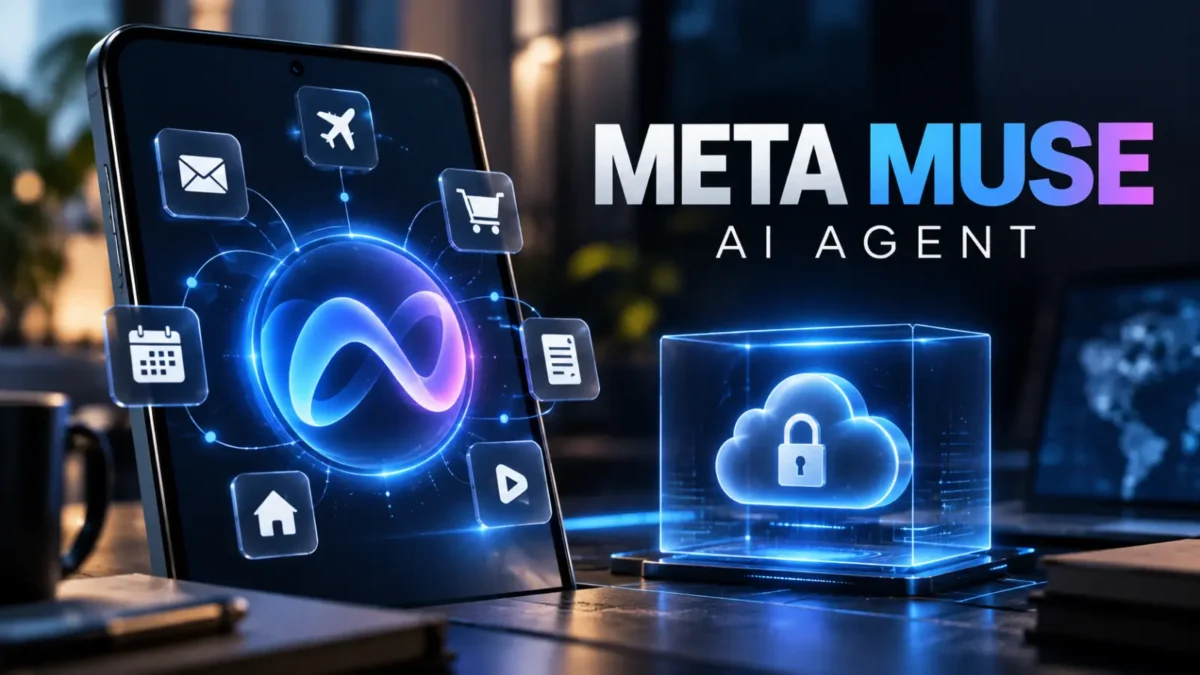
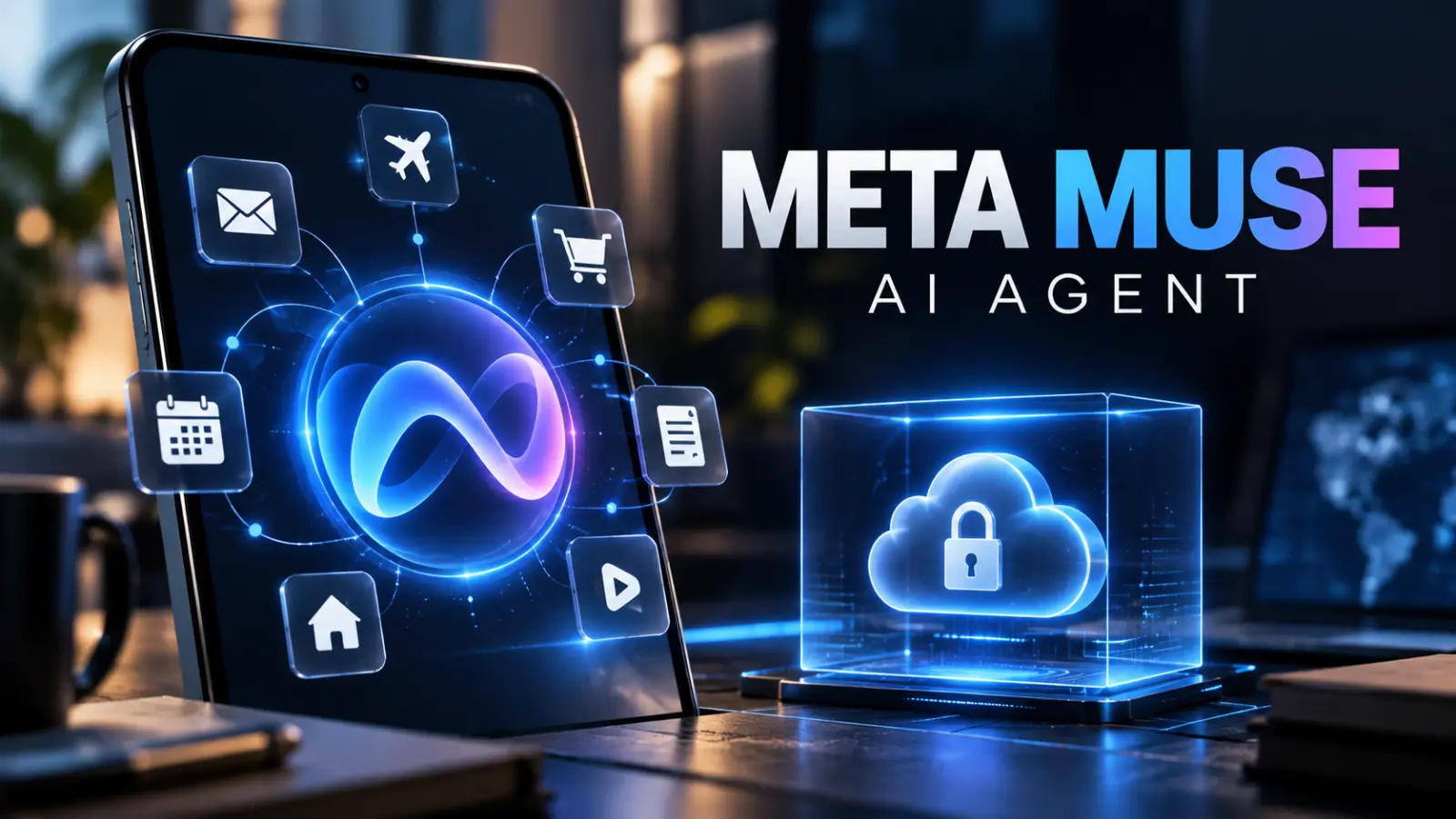
The technology can work with services involving email, calendars, payments, shopping, health and fitness, dining and smart-home functions. It can also perform tasks such as filling forms, sending emails and helping with travel arrangements.
That could change the way people interact with technology.
Instead of learning how to operate dozens of applications, users could increasingly explain what they want and allow the AI to figure out how to accomplish it.
Why Meta Is Betting on Personal AI
Meta has an advantage that many AI companies cannot easily replicate: its enormous consumer ecosystem.
Billions of people already use WhatsApp, Instagram and Facebook. This gives Meta an opportunity to place AI directly into services that people already use every day.
Muse is also part of Meta’s broader push toward personal AI and what Mark Zuckerberg has described as “personal superintelligence”—AI that becomes increasingly useful in people’s everyday lives.
The company is therefore not positioning Muse as simply another chatbot. The bigger idea is an assistant that understands context and can take action on behalf of its user.
But There Is a Catch: Trust
The more capable an AI agent becomes, the more important the question of trust becomes.
Giving an AI permission to summarize a document is relatively low-risk. Giving it access to email, shopping accounts, calendars or payment services is a completely different proposition.
Meta says Muse has been built with security and privacy protections. The company says the system operates within a secure virtual environment and gives users control over which applications it can access.
However, reports have also highlighted reliability and security concerns discovered during testing. Meta delayed the launch while working on safety improvements before releasing the system to users.
That tension could become one of the defining issues of the agentic AI era.
The Real AI Competition May Be About Permission
The AI race is no longer only about which company has the smartest model.
It may increasingly be about which company users trust enough to let an AI act on their behalf.
People may happily ask an AI to write a social media caption or explain a complicated topic. They may be much more hesitant to let that same AI send an important email, purchase an expensive product or access personal information.
Muse therefore introduces a new question for consumers: *How much autonomy should an AI have?*
The answer could determine how quickly personal AI agents become part of everyday life.
A Glimpse at the Future of Personal AI
Meta has also indicated that it wants to bring Muse technology to more of its hardware ecosystem, including smart glasses.
If that vision becomes reality, users may not need to open an AI application at all. They could simply tell their AI assistant what they need while going about their day.
That is ultimately what makes Muse more interesting than a typical AI launch.
The story is not simply about another chatbot.
It is about the transition from AI that tells you what to do to AI that can actually do it for you.
And if Meta can make users comfortable with that level of access, Muse could mark an important step toward a future where AI quietly handles many of the digital tasks that currently consume our time.
Leave a Reply